Lectrosonics DCHT Digital Camera Hop Transmitter
- Two-channel digital camera hop transmitter
- AES digital or analog mic and line inputs
- AES 256-CTR encryption
Unavailable for shipping outside the United States and Canada.
From $2,082.00 USD
Lectrosonics DCHT Digital Camera Hop Transmitter
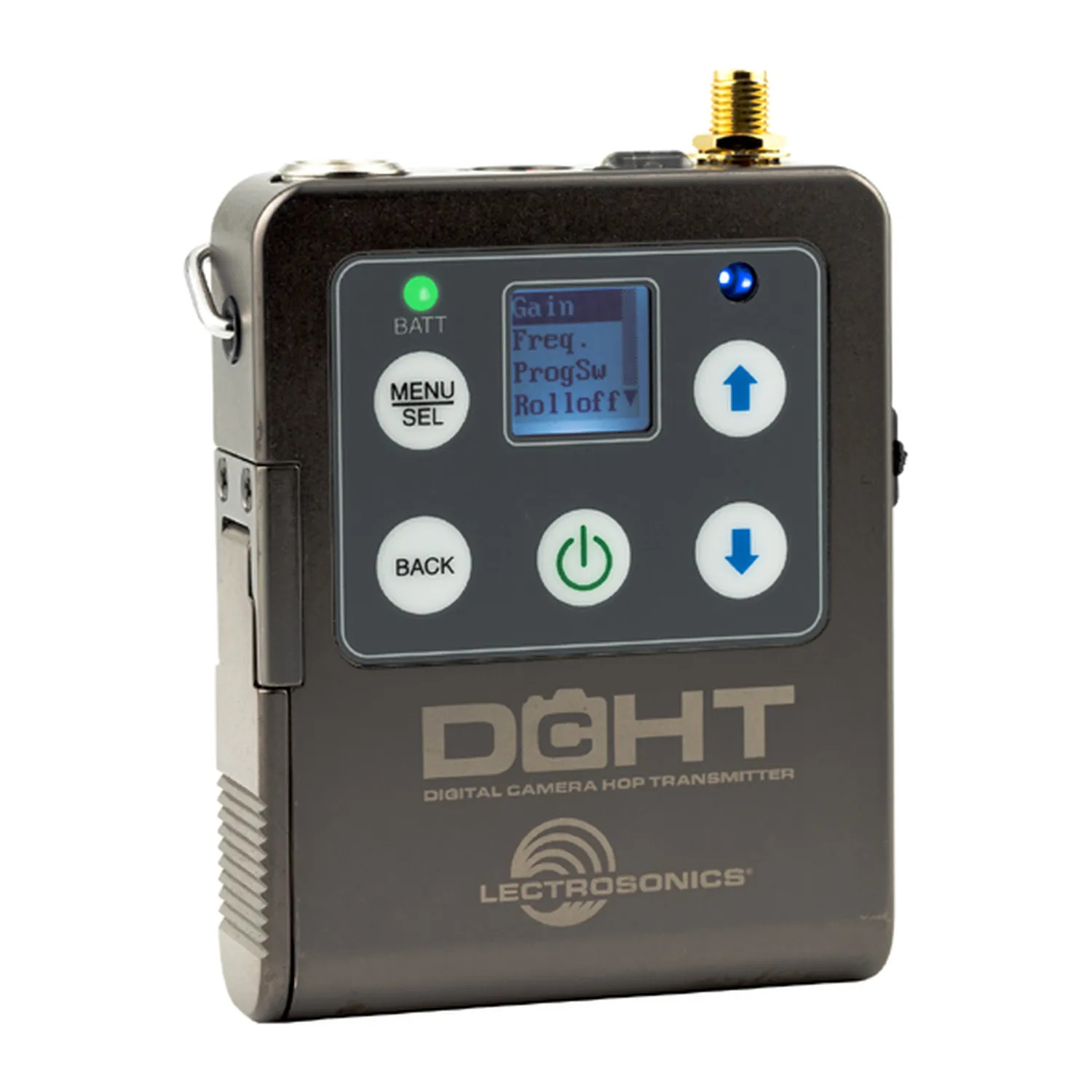
The Lectrosonics DCHT sends two channels of mic, line, or AES digital audio from a bag or cart to a camera or recorder over a pure digital wireless link.
It also works as a portable IFB transmitter for Duet M2R receivers. It tunes across the UHF band in 25 kHz steps, with 10, 25, or 50 mW of RF power. AES 256-CTR encryption secures the signal for high-security work.
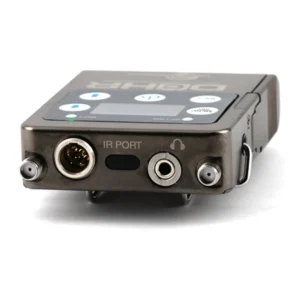
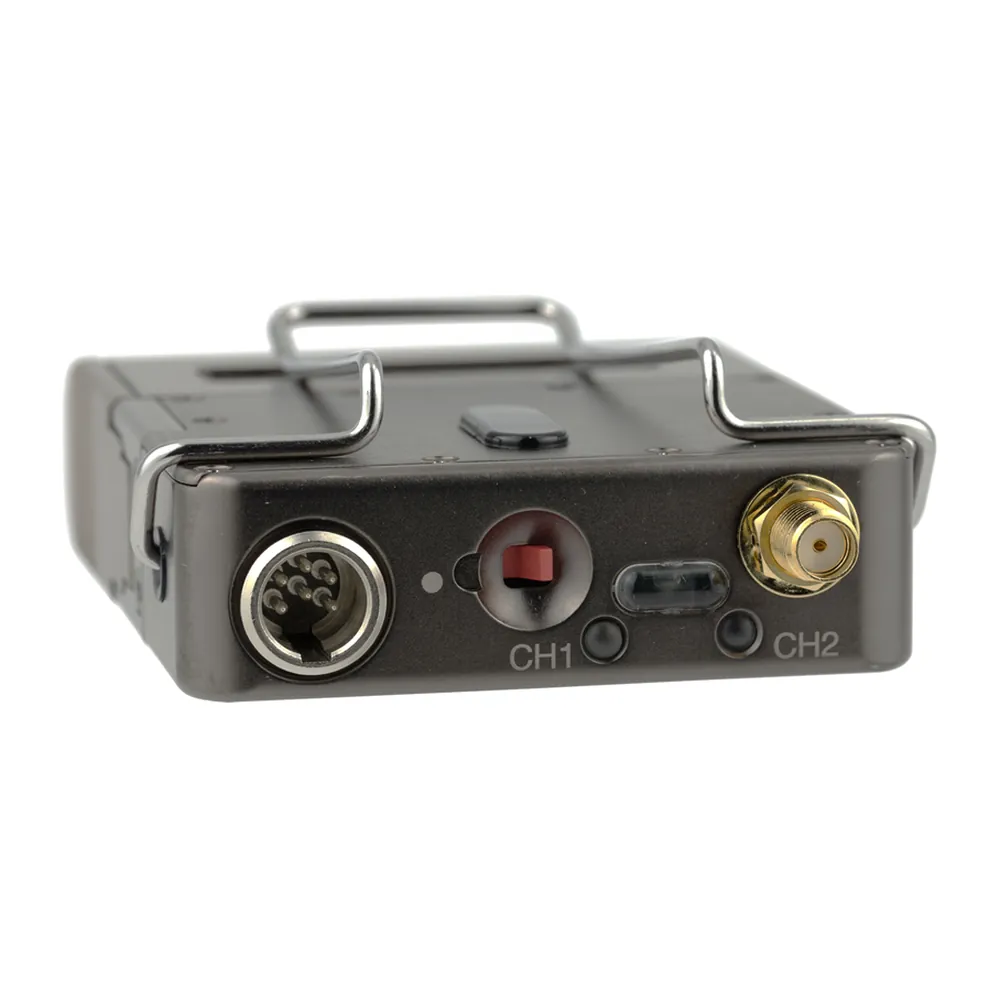
The 6-pin TA6F input takes two analog mic or line signals, or an AES digital signal, through a range of adapter cables. The analog inputs link for a stereo source or run with separate settings, and gain adjusts over 51 dB in 1 dB steps ahead of a DSP-controlled limiter. Two LEDs on the top panel show each channel’s level from -20 dB to the onset of limiting.
The top-panel switch can be set as a mute switch or a power switch, or bypassed. Setup runs through the backlit LCD and membrane switches, the 2-way IR port speeds setup with a receiver, and firmware updates load through the micro USB port.
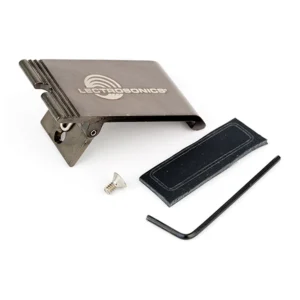
The housing is solid machined aluminum in an ultra-hard dark electroless nickel finish, and the hinged battery door latches so it will not pop open if the unit is dropped. Two AA lithium batteries run it for about 5 hours, or the optional LTBATELIM powers it from external DC. A stainless spring wire belt clip comes with it, and the BCSLEBN spring-loaded clip is an option. Sweat damages the transmitter, so the DCHTCVR silicone cover protects it on the body.
Features
- Tunes across the UHF frequency range
- AES 256-CTR encryption
- Selectable 10, 25, or 50 mW RF power
- AES digital and analog mic or line inputs
- Wide-range input gain and DSP-controlled limiter
- Compatible with the Duet M2R receiver
- 2-way IR port and USB firmware updates
- Two AA batteries or external DC
- Solid machined aluminum housing
Available Options
| Frequency Band | Model | US Tuning Ranges |
|---|---|---|
| A1B1 (470.100-607.950 MHz) | DCHT | One continuous range |
| B1C1 (537.600-662.950 MHz) | DCHT-B1C1 | 537.600 to 607.950 MHz, 614.050 to 615.950 MHz, and 653.050 to 662.950 MHz |
What's Included
- 26895 wire belt clip
- 2 × AA batteries (40096)
- AMJ-19 and AMJ-22 SMA-mount antennas
Specifications
| RF | |
|---|---|
| Frequency Bands (US) | DCHT: 470.100 to 607.950 MHz DCHT-B1C1: 537.600 to 607.950, 614.050 to 615.950, and 653.050 to 662.950 MHz |
| Frequency Steps | 25 kHz |
| RF Power | 10, 25, or 50 mW, selectable (20 mW maximum on the US B1C1) |
| Frequency Stability | ±0.002% |
| Digital Modulation | 8PSK |
| Encryption | AES 256-CTR (per FIPS 197 and FIPS 140-2) |
| Emission Designator | 200KG7E |
| Audio Input | |
| Input Jack | Switchcraft 6-pin locking (TA6F) |
| Input Types | Analog mic and line level; AES digital |
| Input Level (Analog) | Mic: 2 mV to 300 mV nominal before limiting; over 1 V maximum with limiting Line: +24 dBu before limiting |
| Input Impedance | Mic: 300 Ω or 4.5 kΩ, selectable Line: over 100 kΩ |
| Equivalent Input Noise | −128 dBV |
| Input Limiter | Dual envelope, 30 dB range |
| Gain Range | 51 dB in 1 dB steps, digital control |
| Frequency Response | 15 Hz to 11.3 kHz, +0/−3 dB |
| Power and Physical | |
| Battery | Two AA, lithium recommended |
| Battery Life | 5 hours |
| Operating Temperature | −20 to +40 °C (−5 to +104 °F) |
| Antenna | Galvanized steel flexible wire, SMA connector |
| Weight | 5.75 oz (163 g) with belt clip and lithium AA batteries |
| Dimensions | 3.45 × 2.44 × 0.742 in (88 × 62 × 19 mm) |
| Latest Specifications | Specifications are subject to change without prior notice. For current information, visit lectrosonics.com. |
Related products
-
Receivers
Lectrosonics DCHR Digital Camera Hop Receiver
From $2,385.00 USD This product has multiple variants. The options may be chosen on the product page -
Belt Clips, Straps & Cases
Lectrosonics BCSLEBN Spring-Loaded Belt Clip for LT, DBu, and DCHT
$55.00 USD