
Appsys Flexiverter AUX Extension Cards
- Second format for a Flexiverter converter
- Dante, MADI, AES3, ADAT, analog, and word clock cards
- Fits inside the unit’s AUX slot
From $199.00 USD
Appsys Flexiverter AUX Extension Cards
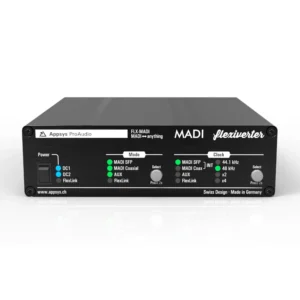
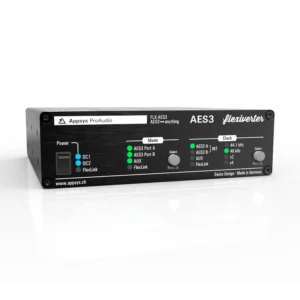
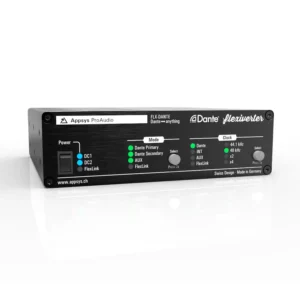
The Appsys Flexiverter AUX extension cards fit the AUX slot of a Flexiverter converter and give the unit a second format: Dante, MADI, AES3, ADAT, analog outputs, or word clock.
Using an AUX Card
With a card fitted, the Flexiverter converts between its built-in ports and the card. A card can also tap channels from another conversion for extra output splits. When two Flexiverters, or a Flexiverter and the Appsys MVR-mkII Multiverter, are linked over FlexLink, the card can add channels and a format.
A card mounts inside the unit behind its own slot cover plate and is held by two screws. Fitting one means taking off the unit’s top cover with a Torx T10 screwdriver, and a unit in a rack kit comes out of the kit first.
The Cards
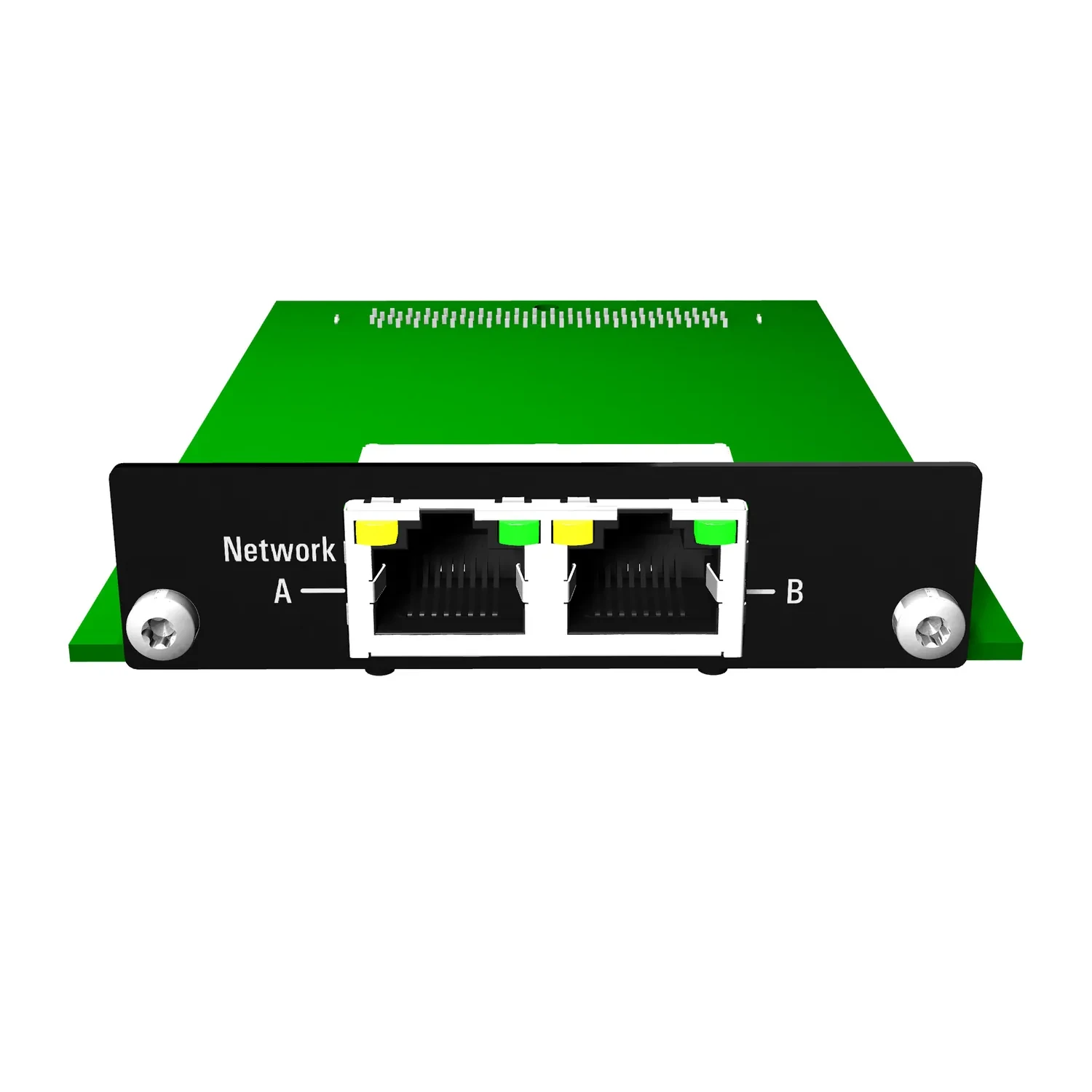
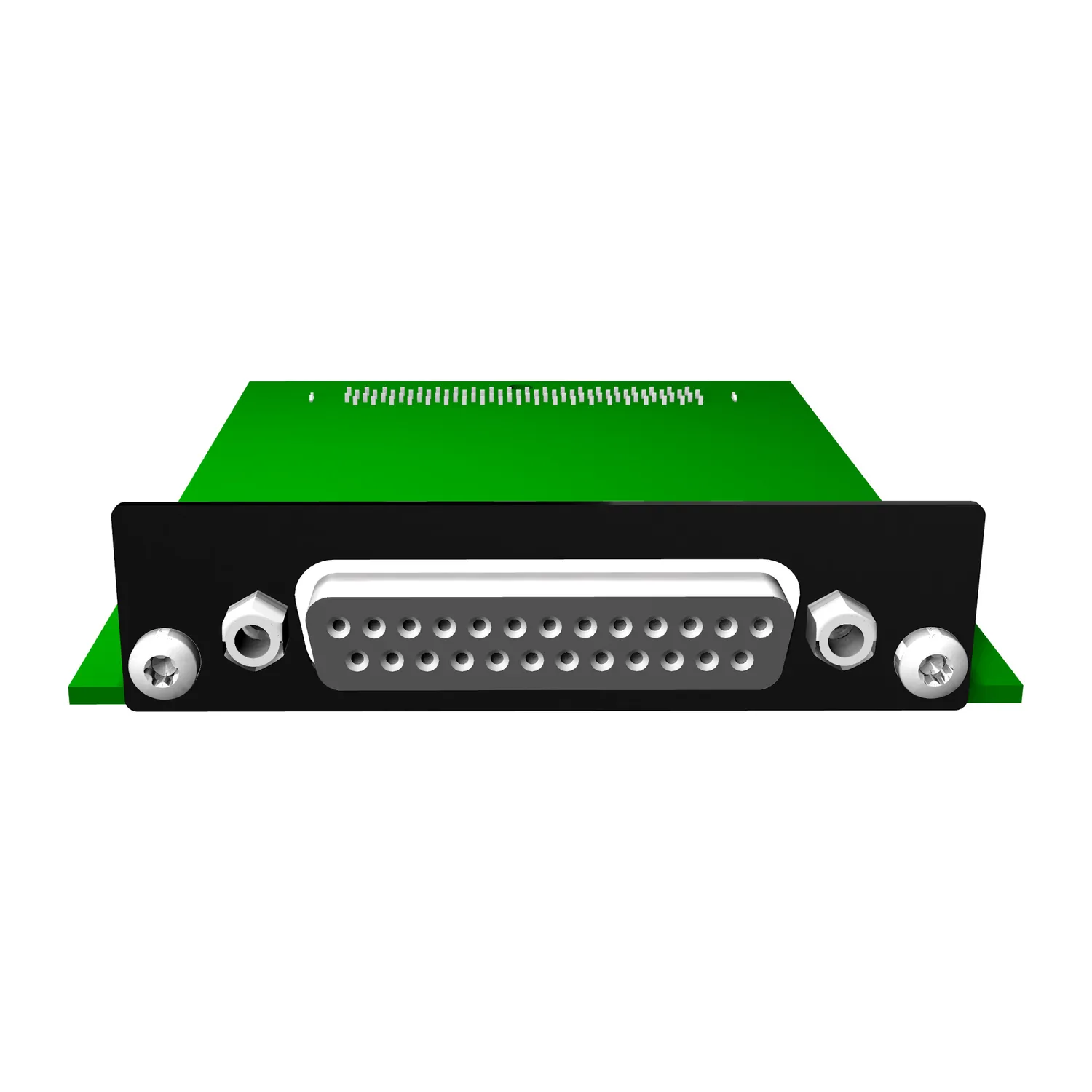
The AUX-AES3 carries eight AES3 channels each way on one transformer-isolated DB25 connector, with a Tascam (AES) or Yamaha pinout set by an internal jumper. The AUX-DANTE has primary and secondary network ports that work as switched or redundant ports.
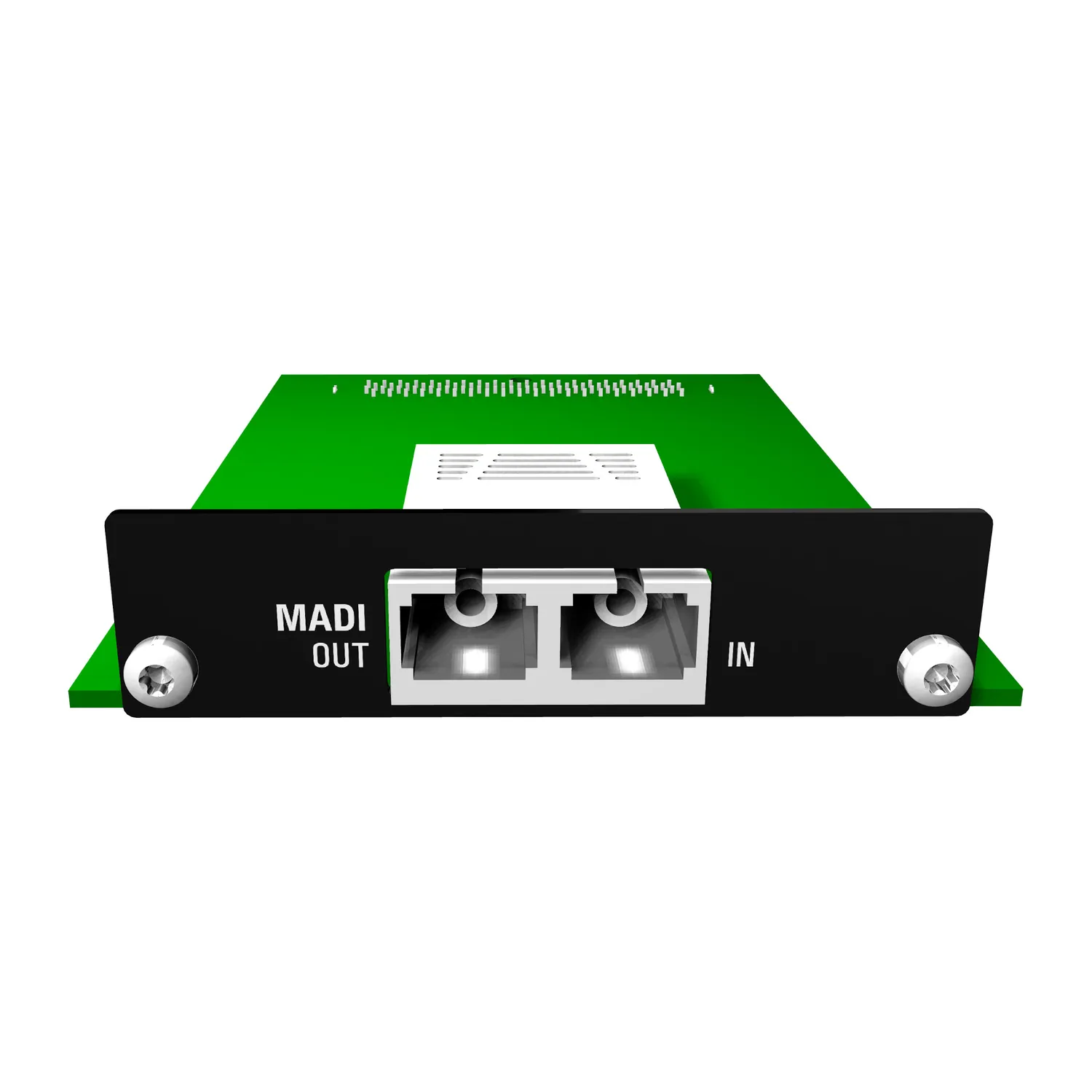
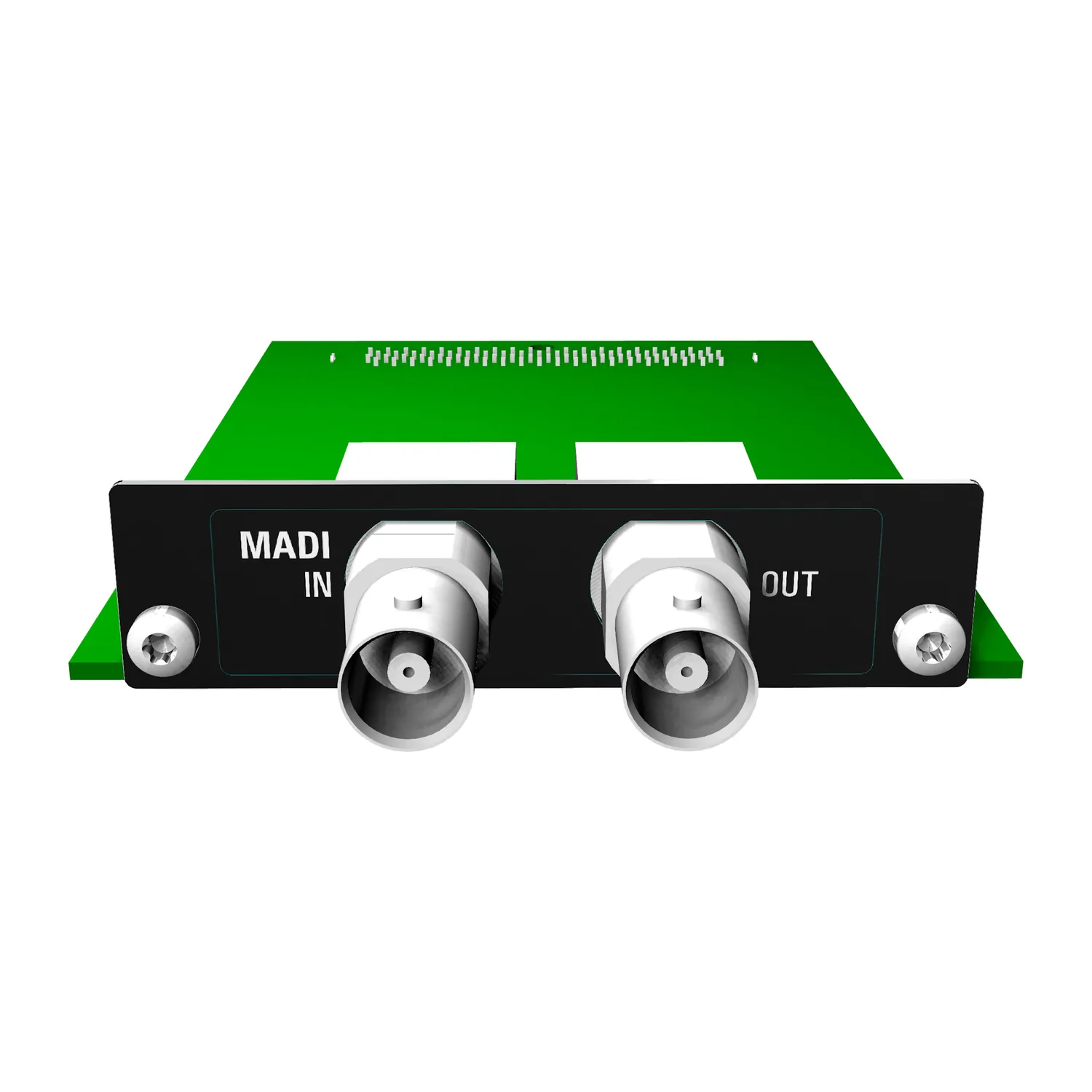
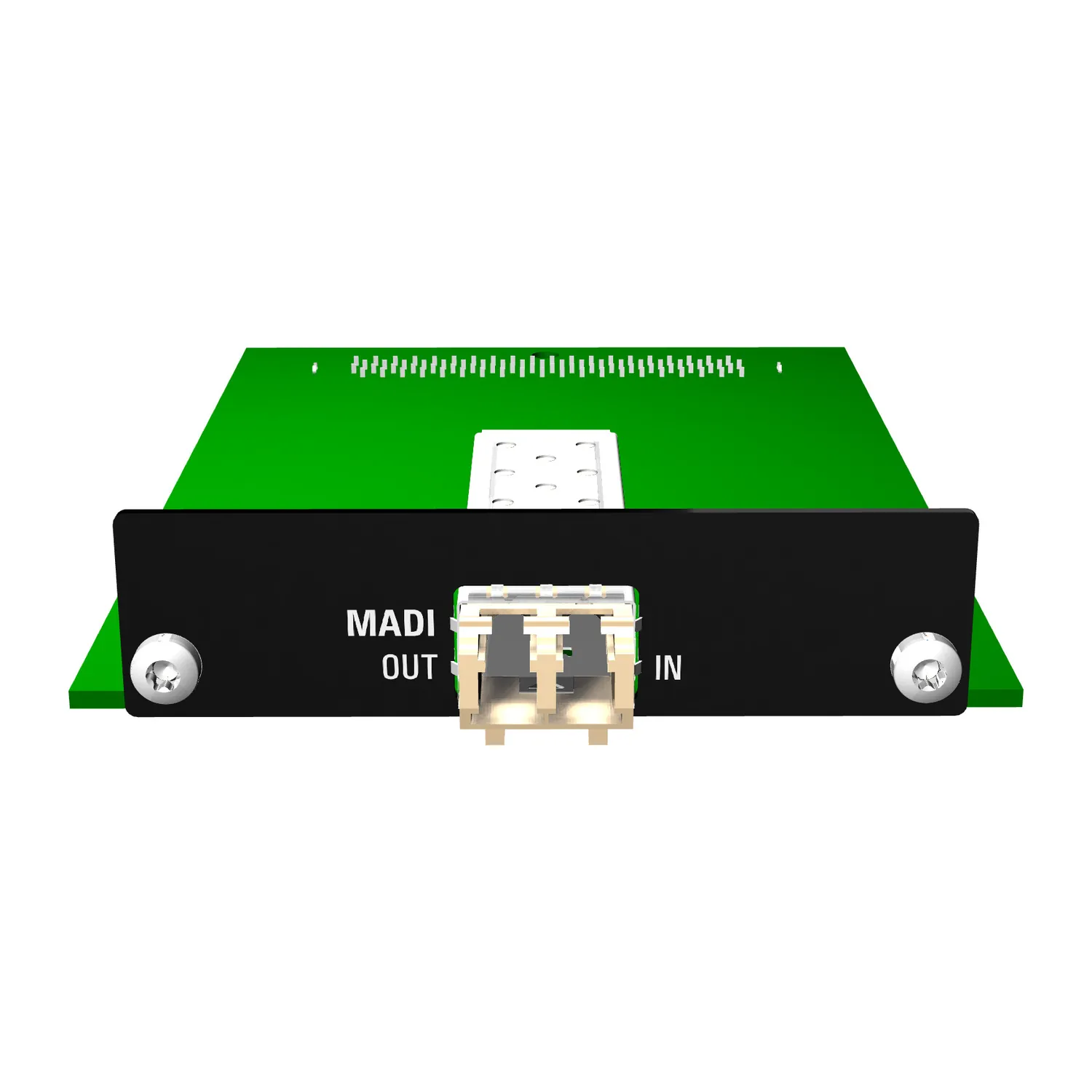
The three MADI cards each carry 64×64 channels at 48 kHz and also offer 56- and 57-channel modes, the 57-channel mode for DiGiCo stagebox control. The AUX-MADI-SFP ships with a 1310 nm multimode module and takes any other SFP module, such as a singlemode one, with no vendor lock.
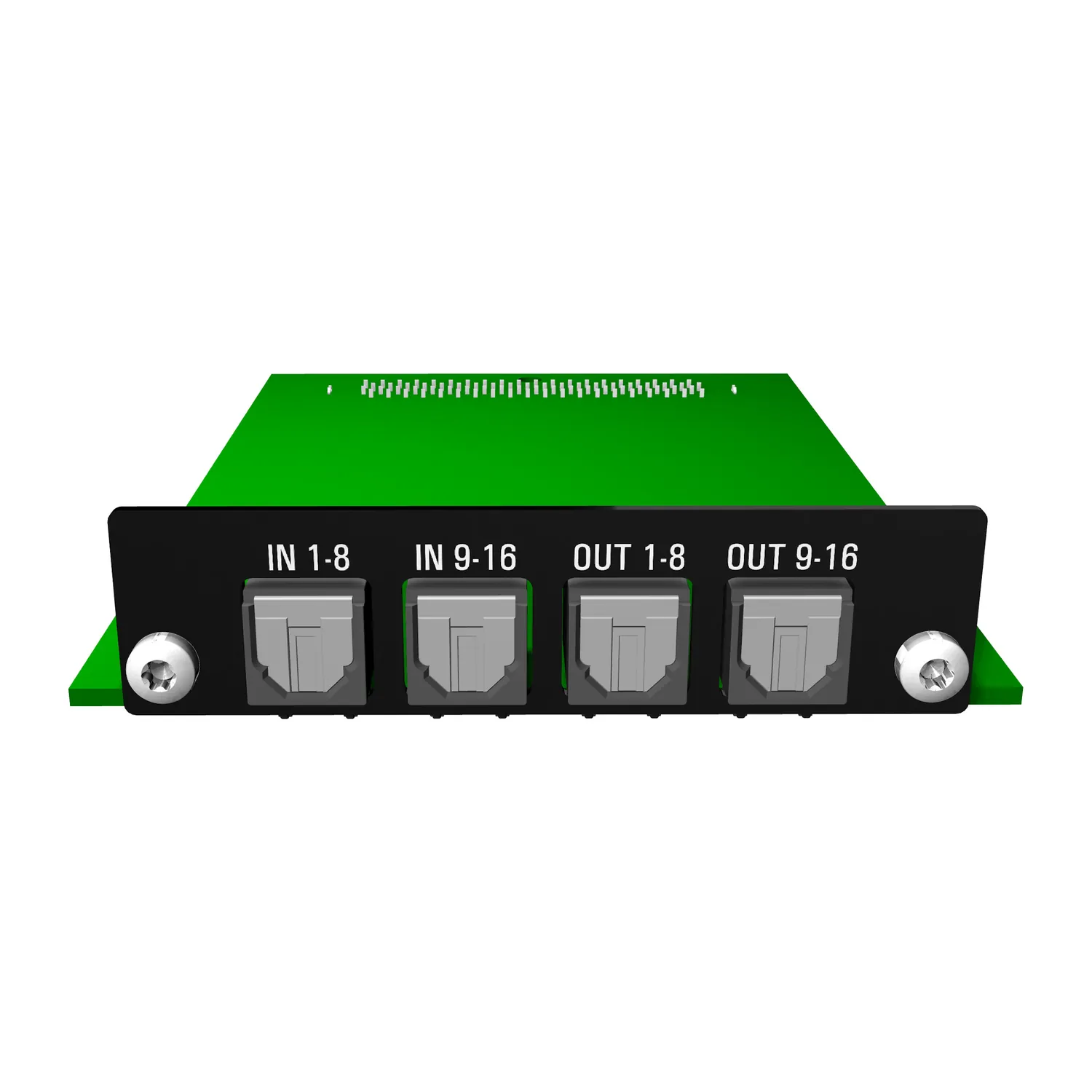
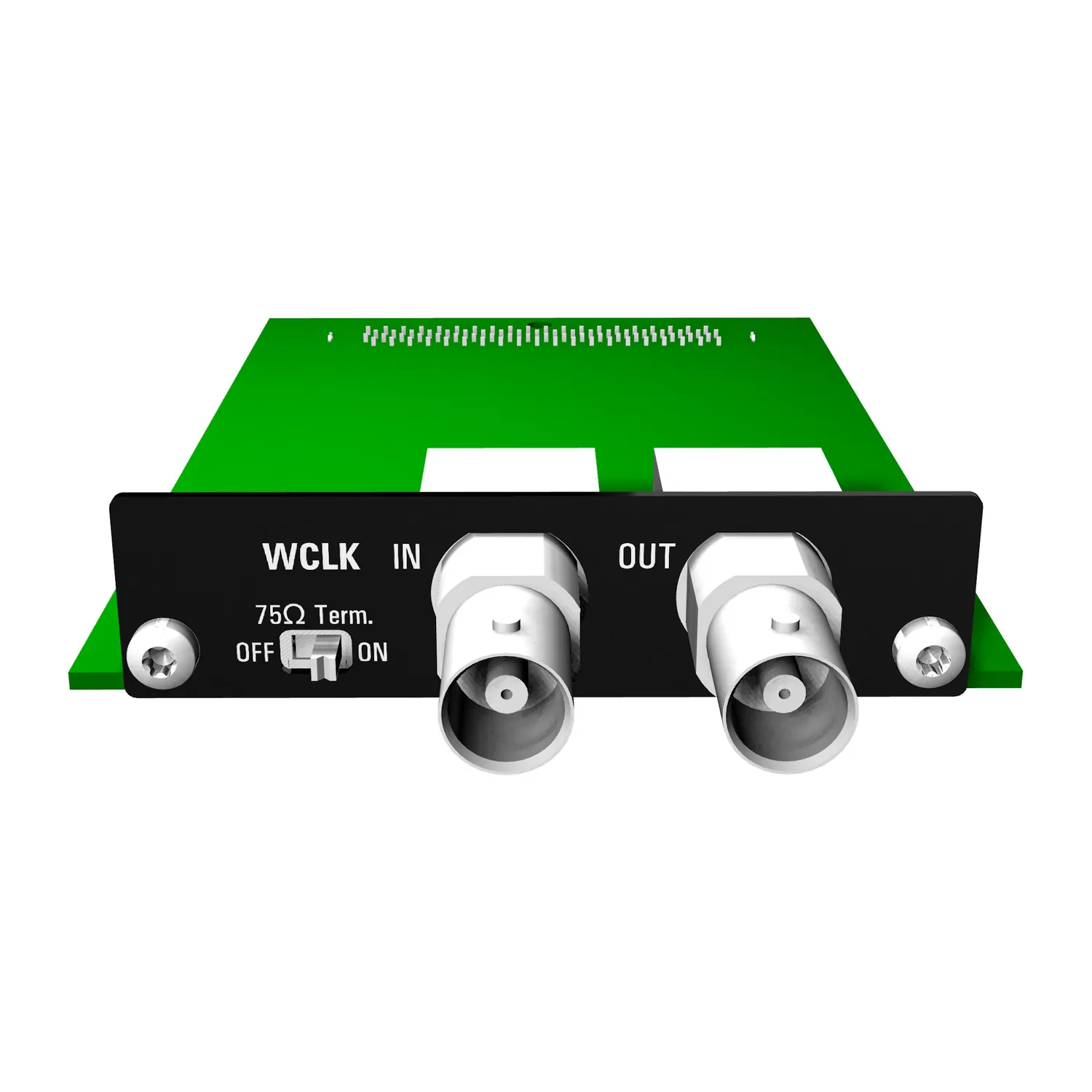
The AUX-ADAT has two optical inputs and two optical outputs for ADAT or S/PDIF. The AUX-WORDCLOCK puts word clock in and out on BNC connectors, with a termination switch on the input, so the unit can follow an external clock or send its own. The Configurations tab compares the eight cards.
Features
- Fits the AUX slot of Flexiverter converters
- Dante, AES3, ADAT, MADI, analog output, and word clock cards
- 64×64 channels at 48 kHz on the Dante and MADI cards
- Converts between the unit’s built-in ports and the card
- Extra output splits or added channels in linked FlexLink setups
- Mounts inside the unit behind its own slot cover plate
Configurations
| AUX Card | Format | Channels at 48 kHz | Connectors |
|---|---|---|---|
| AUX-DANTE | Dante | 64×64 | 2 x RJ45, primary and secondary |
| AUX-AES3 | AES3 | 8×8 | 1 x DB25, transformer isolated |
| AUX-ADAT | ADAT or S/PDIF | 16×16 (ADAT) | 2 x Toslink in, 2 x Toslink out |
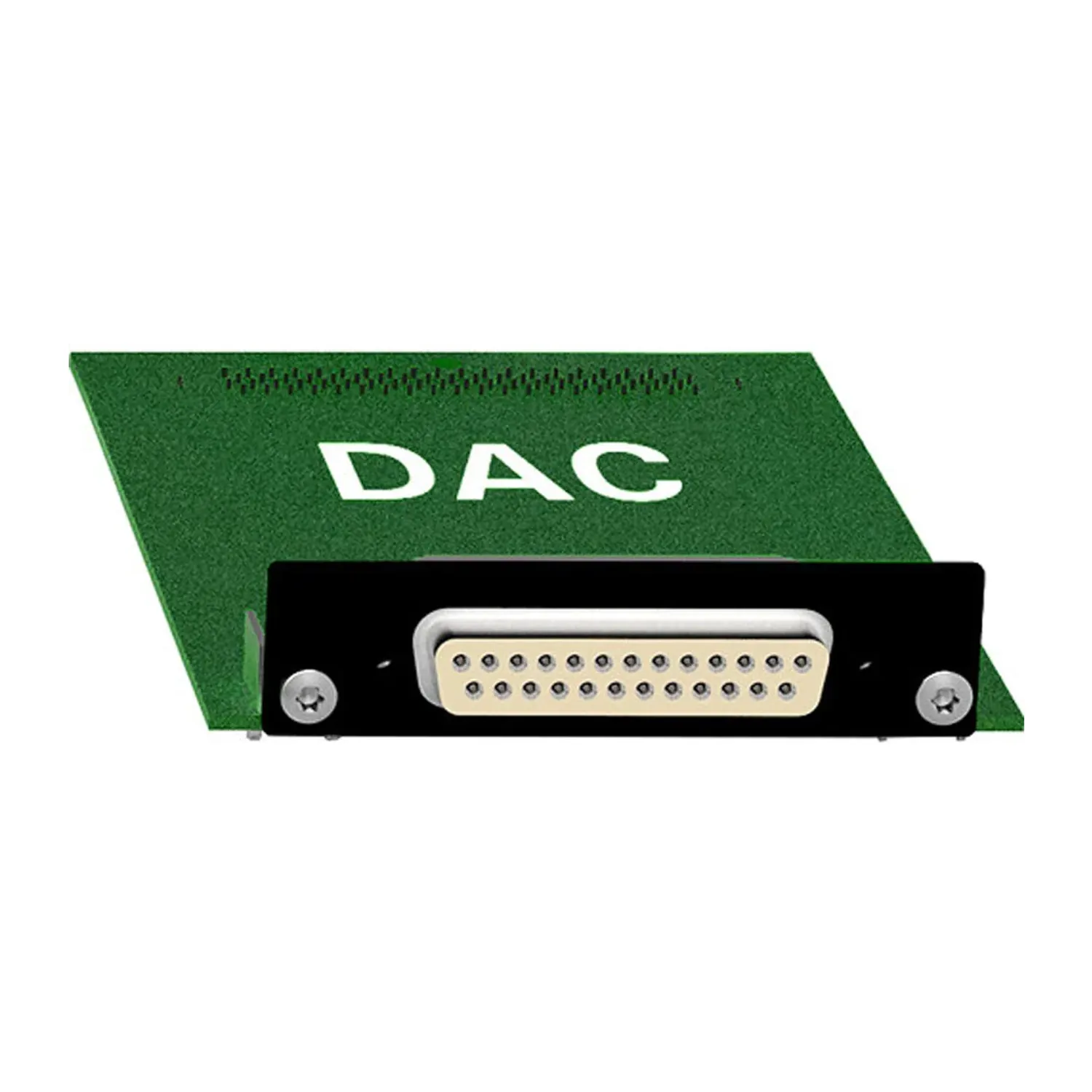
| AUX-DAC | |||
| AUX-MADI-OPTO | MADI, multimode fiber | 64×64 | Optical in and out, 1310 nm multimode |
| AUX-MADI-COAX | MADI, coaxial | 64×64 | 2 x BNC |
| AUX-MADI-SFP | MADI over SFP | 64×64 | SFP slot, 1310 nm multimode module fitted |
| AUX-WORDCLOCK | Word clock | Clock only | 2 x BNC, in and out |
Specifications
| Fits | Flexiverter FLX converters, in the AUX slot |
|---|---|
| Card Size | 118 × 80 mm (W x H) on the AUX-DANTE, AUX-AES3, AUX-ADAT, AUX-MADI, and AUX-WORDCLOCK cards |
| Channels | AUX-DANTE and AUX-MADI cards: 64 × 64 at 48 kHz, 32 × 32 at 96 kHz, 16 × 16 at 192 kHz; AUX-AES3: 8 × 8 at 48, 96, and 192 kHz (single-wire); AUX-ADAT: 16 × 16 at 48 kHz, 8 × 8 at 96 kHz (S/MUX) |
| Sample Rates | 44.1, 48, 88.2, 96, 176.4, and 192 kHz on the AUX-AES3, AUX-DANTE, AUX-MADI, and AUX-WORDCLOCK cards |
| Latency | 2 samples between the card and the Flexiverter (AUX-ADAT, AUX-AES3, and AUX-MADI cards) |
| Cable Length | AUX-AES3: 100 m (300 ft), depending on the peer device; AUX-DANTE: 100 m (300 ft); AUX-MADI-COAX: 70 m (230 ft) of 75-ohm coaxial cable; AUX-MADI-OPTO and AUX-MADI-SFP: 500 m (1,600 ft) of 125 µm multimode fiber; AUX-ADAT: 5 m (16 ft) of Toslink; AUX-WORDCLOCK: 100 m (300 ft) |
| Weight | AUX-ADAT 52 g; AUX-AES3 66 g; AUX-DANTE 73 g; AUX-MADI-OPTO 53 g; AUX-MADI-COAX 83 g; AUX-MADI-SFP 51 g without SFP module; AUX-WORDCLOCK 67 g |