

Yes, we should EQ on set
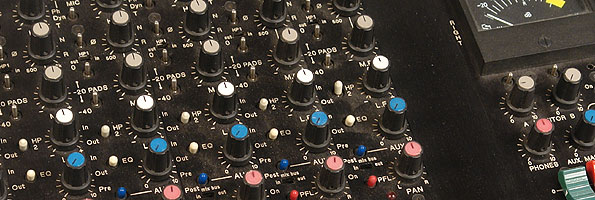
Should EQ be avoided on the set? Only when it is not needed.
I’ll preface the following explanation by stating the obvious: Everything about a production Sound Mixer’s job should be done judiciously, whether it involves the use of faders, limiters, choice of microphones, how hard to press when writing on a 4-part sound report, and decisions about EQ.
Also obvious but worth stating: It is rare that large amounts of EQ adjustment are required to neutralize (equalize) a voice, and if a microphone sounds drastically unnatural, then the first actions should include checking the mic placement or checking for equipment failure (mic, cable, console, whatever).
What becomes obvious when setting out to writing about the many complex issues of EQ, is the fact that it will take much more than the two thousand words below to cover the topic.
So, please keep in mind that all of the above is considered when stating all of the following:
How much EQ should we use? As much as needed.
The proper amount of EQ adjustment-large, small, or none-is equal to the amount required to neutralize the voices going to the mono mix. It is the Sound Mixers job to make that determination and perform the task. This is true whether you are a seasoned pro or a nervous beginner. The amount of EQ that should be applied is equal to the amount needed.
Do not be afraid.
Many production sound mixers are reluctant (afraid) to use their EQ. Often, this stems from indoctrination early in their careers by discussions with post production mixers. “Don’t turn the EQ knobs… I’ll do that stuff later” (read this again with reverb added for effect). But the fact is that under-EQ-ing (not using the EQ controls enough) is an improper use of EQ every bit as much as over-EQ-ing is. If there is any use for a Sound Mixer’s fear of the EQ controls on their equipment, it is to motivate the Mixer to be as mindful of not using the controls enough as they are of using them too much.
Times change.
It may well be that on-the-set use of EQ has slowly become more important than it has been. Overlapping dialog (two or more actors talking at the same time) is no longer the taboo practice it used to be, and is now rarely avoided; sometimes it is even encouraged. I should make a t-shirt that says “Overlap Happens”, because you can pretty much count on it.
Overlapping dialog, and the fact that it will happen, is the primary reason that EQ-ing a microphone should be done on the set, when needed. This is because a mono mix of overlapping voices into two or more microphones cannot be EQ-ed later to affect only specific microphones. If any voice is EQ-ed then the others are automatically EQ-ed along with it. Therefore, during the recording of the mono mix, it must be the production sound mixer’s job to EQ (equalize, normalize, neutralize) the voices going into the mono mix.
Use of multi-track recorders (4 to 16 or more tracks) for film and video production sound is now the norm, and the most accepted way to use those tracks is to have a mono mix on track 1, with all microphones also recorded prefader onto their own tracks. But even with all of these isolation tracks, the hope of post production mixers is that the mono mix can be used as often as possible, saving them the time and effort of importing isolation tracks and remixing.
It is also more and more a trend to use multiple lav wireless microphones. If any microphone type is going to need the help of EQ to sound more natural, it is a wireless lav. This is primarily due to placement and the clothing that lavs may be hidden under. But different models of lav mics are often used together (due to size, color, availability, sound preference, etc.), and any model can sound quite different from the next.
If a mic is particularly dull or bright sounding (because of any number of factors), and this mic is put into an overlapping mono mix without being EQ-ed, then there is nothing post can do to alter that mic without imposing the same change on the other microphones in the mix. In this case you absolutely should EQ the mic with whichever available knobs that seem to work, to normalize it with the other microphones, based on what you hear in your headphones.
Of course, I am not suggesting that EQ perfection can always (or ever) occur on the production set, but even when satisfaction is not achieved on the set, much can be done during production to improve a situation, especially in the mono mix, thus reducing the workload for postproduction, ultimately contributing to a better final product.
Isolation Tracks: Pre-EQ or Post-EQ?
OK. So we need to trust ourselves to EQ on the set. But should our isolation tracks be pre-EQ or post-EQ? Thankfully, it is now the accepted standard that our isolation tracks be pre-fader (as odd as it may seem now, even that was often debated not too long ago). But should our isolation tracks also be pre-EQ? After all, since the iso tracks are postproduction’s chance of remixing with a clean slate, wouldn’t it make sense that these “insurance tracks” be completely free from our artistic input, EQ included? I used to think so. But the way that these tracks have most often become beneficial has changed my mind.
When prefader tracks are used in postproduction it is usually not to completely remix the scene. Rather, it is more often to replace a phrase or a word that might have been ruined in the mono mix by something like clothing noise from another actor’s mic (or any number of other possibilities). Therefore, when taking pieces from the isolation tracks to rebuild a part of the mono mix, it is much better that the EQ-good or bad-matches what’s in the mono mix. This prevents the postproduction mixers from having to try to EQ the isolation tracks to match EQ adjustments that the production mixer may have done in the field.
What are the odds?
I’ve heard postproduction mixers who are against the practice of on-set EQ-ing mention that they’ve had to fix EQ problems caused by production mixers, which, like anything else, is bound to have happened. However, of all the times that post production mixers did not feel they had to fix the production mixer’s EQ mistakes (presumably most of the time), how do they know that it wasn’t because the production mixer EQ-ed the tracks properly? The answer, of course, is that they don’t know, because, as it should be, the best work of a production mixer goes unnoticed.
When EQ in post production is called for (presumably very often), it still stands to reason that the EQ efforts of the production mixer, based on experience, skill, and listening, are much more likely to have improved things than to have made them worse. On the relatively rare occasion that a production mixer’s efforts actually made things worse, that would be a great time for the post-production mixers to open their magic toolboxes.
How much EQ should we use? Enough to have the desired result–no more, no less.
Among attempts to discourage production mixers from using their EQ knobs include the phrase, “A little goes a long way.” But this is simply not true with regards to EQ. The truth is, “a lot of EQ goes a long way” and, “a little EQ goes a short way.” If a little EQ is all that is needed, then a little EQ is what should be applied. If a lot of EQ is needed, then a little EQ is not enough and would be a misuse of the EQ controls. You should apply the amount of EQ needed to achieve the desired results. More or less than that amount is the wrong amount.
Monitoring with headphones?
“But can production sound mixers be trusted to make decisions based on what they hear with their headphones?” When pondering that question, consider this. It is universally expected that production sound mixers use their faders to achieve a natural balance between voices, using only their headphones for reference, yet the frequency curve of voices has a significant affect on perceived loudness. So, why should it be different with EQ judgments? It shouldn’t. They are actually one in the same. Other commonly accepted decisions involving EQ are also made all the time, even without adjusting any of the controls. For instance, any time a Sanken COS-11 and a Countryman B-6 are chosen for the way they sound to the production mixer, an EQ decision has been applied. When a Schoeps mic is chosen instead of another brand, based on what the sound mixer prefers, another EQ choice has been made. When repositioning a hidden lav microphone to obtain more “crispness”, another bold act of EQ analysis has occurred. All of these decisions were based on tonal quality determined by the production sound mixer by listening through their headphones.
It’s up to you.
Regardless of your decision about EQ-ing on the set, remember, as the production sound mixer, that decision is yours-and yours alone-to make.

All good points Glen, except for this: those EQ decisions are not yours or ours alone to make. I understand the impulse to want to optimise sound as much as possible on location, but there is a danger of possibility turning into license, and the frequent lack of communication between post and production sound DOES cut two ways. Yes many times location EQ was used and no one noticed. But no news coming back to you in the field does not mean that post did not have to do fixes–we generally do not “drop a dime” on the location mixer about things we have to fix in post, we just do the best we can and move on–no time for recriminations usually. And, sorry, I think you are wrong about the headphone monitoring vs judgement thing–it DOES make a difference what you listen on, no matter what experience level you are at. So twist those knobs, my friends, but remember that unless you are mixing live TV someone else will be having to fit all the pieces of the puzzle you made together later on, and think for the team.
Glen,
Great piece, I concur with your take 100%. I would also add one thing: Check with your re-recording mixers and dialogue editor, and if everything below 100Hz in the final mix is going to be used exclusively for M&E, use your high pass filters in production, and you’ll have a few more dB of dynamic range for voice.
Another reason to try to make the tracks as good as possible including using EQ is that for the last 10 to 15 years a lot of sound is edited by video editors, not sound editors. They don’t have a clue as to what is bad, good or best. Only “can I hear and understand what they are saying”. Despite the editor’s ability to rewind and try it again, they don’t, making it even more important we get it right in the field as it may not be heard let alone fixed in post.
Glen,
Your thoughts on EQ are, in my opinion, spot on.
I have always employed all the EQ at my disposal to make the actor’s voice sound “natural”. Sometimes it’s a little, sometimes a lot–to the point that sometimes I wish I had even more. I have never been criticized for delivering over-EQ’d tracks….if only they knew what we add or subtract in order to make it “flat”. Thank you for sharing your insightful perspective.
Geoffrey Patterson
Thanks to all for their input thus far. This topic will likely take some discussion.
Phil, the production sound mixer is the only one who can make judgments during the production because they are the only one there. I’m trying to image calling someone involved with postproduction sound at 2am during a night-for-night diner scene when I’ve determined that a plant mic needs to be placed on a table to pick up a line. The conversation would go something like this:
“Hello?’ (groggily).
“Hi, I’m the production mixer. There’s this one line that we can’t get with the boom because of a shadow in the wide camera, so I’ve decided that the best option is to plant a Sanken COS-11 on the table in front of the actor, PZM style, but it gives the voice a brittle quality compared to the other actors we can boom in the same scene, and it affects the ambience in the same way when I bring it up. Rolling off the upper-mids helps it blend in with the boom pretty well, but I wanted to run it by you for final approval. Or, I could brighten the boom mic to help it match the plant mic. What do you think?”
Still groggily: “‘Are you x%@# kidding me?”
Clearly, such decisions – to EQ or not, where, how much, and how little – is the production mixer’s responsibility, and theirs alone, based on a number of considerations that begin with what we hear in our headphones.
Glen Trew
Hi Glen , First of all congratulations in being brave enough to tackle such subject matter ! Secondo , I agree agree agree.To simply summarize , the ART of sound recording is what all this is also about,I’m not just a technician .My ears are on the set with the headphones on and I’m hired and I guess trusted to make the right decisions for all including the post people team .I’m careful and NEVER over eq because ”the buttons are there ”…and sometimes I never do (so many factors invloved about when and if I do ).I remember one day I had two male actors with deep rich voices overpowering an actress that had important lines to deliver….but she had this thin soft spoken voice….I had to do something to fix this in the mix track because the scene was meant to be played out with overlaps in the dialogue .The final result was great..some subtle and transparent eq’ing did the right thing .Good piece ,strong arguements and reflects todays realities .Bravo encore.Joe
Glen is great. Glen is good. Let us thank him for our production sound gear and advices. However, I’ll put on my audio post hat (and my kevlar vest) and join in on this one. I would agree with this article for projects where there is no audio post except what the video editor can accomplish. Otherwise, I think the article should be tempered with other considerations.
If your mic’ing doesn’t sound right first try different placement(s) and then if necessary try a different mic. If drastic EQ is necessary, that is a signal something is not mic’ed right and not necessarily neon over the parametrics.
The truth of the matter is that the EQ’s utilized in audio post ARE far better than those available on set (sorry but it is true). They can be much more precise for filtering and ‘enhancing’ the sound of dialog. They can also be automated with very quick and precise controls. I can highpass something for a small portion of a second to fix something whereas if it is applied in the field that person’s warmth is killed from the word go (or ‘action’ if you prefer). Same is true for Dynamics.
I don’t care how long you’ve been using your favorite pair of headphones. You shouldn’t use them to try and make precise judgements of what is happening across an EQ spectrum, especially the low end. To say otherwise ignores the purpose of tuned and calibrated room, quality monitors, detailed dynamics, and more.
I try not to say always ‘don’t’ or always ‘do’ Logical judgement will suit best. Whatever location gives me is right. I have worked sound on set and I do know how things go. I believe I am always being given the best sound someone could manage to capture given circumstances.
and no don’t call me in the AM to ask which mic should be used!!
Hi Todd,
Thanks very much for joining in.
As the original article suggests in the first paragraph (“…if a microphone sounds drastically unnatural, then the first actions should include checking the mic placement or checking for equipment failure…”), I think everyone is in agreement with your statement: “If your mic’ing doesn’t sound right first try different placement(s) and then if necessary try a different mic…”
But it’s interesting that your statement suggests that production mixers can make subtle quality decisions involving mic placement based on what they hear in their headphones, but cannot trust their headphones when making decisions involving the EQ knobs. However, failed microphone aside, what is much more likely to occur is that the microphone and placement are already optimized for the given situation (wardrobe, set, shadows, framing, etc.), but still needs to be EQ’d to blend in the mono mix.
I think it is universally accepted that post production has the most capable tools (EQ, etc) and endless second chances for shaping the sounds recorded by production mixers. So keep in mind that the primary reason for this discussion is because of the mono production mix, and the assumption (please correct me if I’m wrong here) that post production usually prefers to use the mono mix when they can. Since an actor’s voice cannot be singularly adjusted by post production without also adjusting other overlapping elements (ambience and other actors), the EQ should be applied on the set when the production mixer makes that determination.
Glen Trew
Thanks for having me. I believe that the more I learn about production sound the better my resultant post work will be.
I have no problem making the statements that; Your headphones on set are the only reference you’ve got so you should use them as best you can to determine how the mic’s are capturing the sound you want. AND That doesn’t make them the ideal environment for mixing/EQ’ing. Both are true.
The mono mix IS what gets used for many of the TV shows my circle of sound nerds works on. Your assumption that Post prefers it is interesting. Honestly, if budget and time allowed, I would prefer to use the ISO tracks but hey, people call me weird and I’m okay with that.
You can call me anytime, Glen! And I’ll tell you that you gotta do what you gotta do! But your example isn’t what I’m talking about of course. As I mentioned in our other discussion, I am not against tweak EQs and compression in the field, but I think that production mixers should be careful of getting outside of the range of a few db, particularly of mid and upper range boost. Again–the production mixer doesn’t have a clear idea of what will cut to what and you can actually make matching problems worse with field EQ. And your headphones are not a calibrated mix room! The production mixer does have the most flexibility in getting a sound, but only if they have time and opportunity. Most of the jobs I work on now do NOT allow for many takes to get things right w/ mic EQ or position–I seem to be in the world of “shoot the rehearsal and move on” so I generally have only one or two shots at scenes (and in the verite-style shoots so popular today, one and only one shot) so I’ve decided that being conservative
about my settings is best for everybody. Re: isos: I think the more you want to EQ etc your mix, the more you should consider leaving the isos flat.
I understand the comment about video editors mixing, and many ENG/corpo etc jobs do not have audio post per se. If you know that is true for a given job then do whatever you can to make it all work, of course.
Philip Perkins (CAS)
Philip Perkins wrote: “…but I think that production mixers should be careful of getting outside of the range of a few db…”
It is a given that production mixers should be careful, just like everyone else involved in the production. But if it is fair to caution production mixers about over-EQing, then they should also be cautioned against under-EQing.
After proper consideration given to all of the points in the posts above (which, with experience, takes about 25-microseconds), if it is apparent to the production sound mixer in their headphones (presumably the same professional monitors the sound mixer has been living in for years) that an input requires +/-6dB of EQ, then +/-3dB of EQ is 3dB to little, which is no better or worse than +/-3dB too much. We should strive to apply the right amount in the right places in the right way.
It is not about granting license; production mixers already have the license to mix, the moment they are hired. Production mixers should attempt to get the best mix they can, which includes applying EQ to best advantage; no more, no less.
Glen Trew
I’m not sure how I see that too little EQ is as much of a problem as too much. Often, I find, a lot of EQ means you have the wrong mic in the wrong place–the mixer should fix the problem they hear another way, if they can. I generally think that if one is in doubt, then don’t–EQ, marry, take that job etc.. It is easier to work and blend audio that has been less messed with in post, I have found. How about this–those of you who feel compelled, licensed, permissed or whatever to EQ as much as you want–take some of your work home and listen to it on your favorite speaker system. If you still like what you did in that heavily EQed scene, then I (post) probably will too. But do take the opportunity to listen to your work a bit the way we hear it.
Thanks for bringing this topic again Glen.
Philip Perkins CAS
I would have to disagree with Glenn here. I have had the pleasure of mixing on set, and I also have the pleasure of mixing dialogue every day in post. Nothing kills us faster than trying to match two thinks that a production mixer could never imagine being cut together and thus EQ’d differently. On set you cannot A-B Scene 1 take 5’s boom mic, to Scene 1a take 6’s body mic… You might think you are getting them close but when you hear them cut together you realize what a mess has been made… Add another 10 or 15 shots in there and now I have to earn my living. I have not ever (with the exception of TV… and even then sparingly) used the Mono picture editors track. And other than mixing out shortsighted EQ decisions only late and bad fader moves are as hard to fix. From post, please, 24/48, minimize everything below 80 or 100, and use EQ only if you have to (and then as little as possible)…
Coll Anderson
Wow, I stumbled onto this topic by accident and I’m pretty surprised by it. I’ve stated elsewhere that over use of eq in the field is a mistake for the novice and the veteran mixer. Headphones are not a good gauge to judge how your final sound is going to be heard. I’m confident in the eqing that I do because I’ve been wearing the same headset for over thirty years, I recently purchased a “high end” headset from Trew Audio and was so shocked by the difference in sonic quality that I put them back in the box and have never used them. I wouldn’t be comfortable trying to eq a mic while learning to train my ear to a new sounding headset.
This is why I profess that the most important thing for the novice and begining soundie, is to listen to their sound on speakers, preferably on a system they are familiar with.
Over use of eq while listening to headphones is why the post mixers have to manipulate your sound later. If you over eq something and then the only option you’ve given them is a post fader and eq’ed iso track, you’ve screwed them and yourself by not giving them the chance to manipulate the track.
Interesting choice of topic for your own website, where Glen is good.
Richard Van Dyke
There´s one thing the author didn´t mention or didn´t consider:
There´s no way for a production sound mixer sitting on set to predict how the scene or in fact the whole film is going to end up after being edited.
So with that in mind “continuity” is a relative matter.
Propper EQing can only be done in the context of the film with everything else playing in context as well. There´s no way this can be predicted on set.
This has nothing to do with the prod. mixer´s incapability to EQ it´s just that there´s no way for him on set to listen in a context of a film that hasn´t even been edited yet.
What you call “over” and “under-EQing” can only be heard in context of the edited scene, wich you can´t on set.
Also there´s no way you can make a Sanken COS11 sound like a boom with a Schoeps using an EQ anyway. You might only have 1 or 2 chances to get it right. In post you just rewind and give it another try.
I understand the desire of a prod. mixer to get the mix-track as good as possible since everyone is listening to that when they watch the dailies during the shoot and it´s a hire-and-fire-situation.
But I can only recommend: Please at least do not EQ the split-tracks! If the mix is great and your EQ worked, great! But if not, give post a chance to change things that didn´t work out that well.
Thanks,
Frank.
Thanks again to everyone joining the discussion.
I’ll re-state that the subject of EQ in this thread is primarily in consideration of the mono mix, and what seems to be the desire to use through the entire process whenever possible. I think it is universally accepted that esthetic use of EQ (bobbing and weaving in and around music, sound effects, etc) is only for the final mix. But blending lav microphones that are always different due to a number of factors on the set, with each other and with microphones that are more likely a known constant (boom microphones, typically) in the mono mix must be the job of the production sound mixer, whether it involves the use of the faders or the use of the EQ controls.
Since it seems that post mixers are the most likely to be concerned about EQ use on the set, here are some questions for the post mixers:
1) In post, when you have to EQ two scenes differently so that they cut together smoothly (such as Scene 1 take 5’s boom mic, to Scene 1a take 6’s body mic, as in Coll Anderson’s example), how do you know that it’s because of over EQing by the production mixer instead of under-EQing or lack of EQing?
2) In the case of a mono mix with two, three, four (seven, maybe?) overlapping actors using hidden lav mics (a daily occurrence for many of us if not most of us), how can post mixers EQ one voice without also EQing the other voices?
Thanks for you participation.
Glen Trew
re: 1: We don’t know. But poorly done field EQ would definitely make things harder. (And well done field EQ could make things easier. The problem is the risk of blowing it w/EQ and not getting another take as well as the consistency issue.)
re: 2: We can spot EQ, a word at a time if need be. For me, the problems aren’t really so much in the big overlaps (where so much is going on that the EQ would have to be really extreme to be audible as such) as in the words/sentences where the a speaker is in the clear.
But we do spot EQ all over the place, as part of the mix automation.
Philip Perkins
Pre-Dubbing dialogue on a feature at the moment. Very complex show with rapid-fire dialogue, the mono mix of the show has been used in one instance (for 1 line of dialogue). The rest has been replaced from iso tracks. Don’t EQ apart from (some) low cut filtering. Even that is often overdone and it seems as a reaction to monitoring many open mics at once and an over-reaction to the amount of bass end that builds up from this.
These are not an indictment on the skills of producing a great mono mix, it’s the reality of not being able to predict how the show will be cut and how your changes that you put onto the production audio via EQ’ing will affect Post later.
If we are ADR’ing a character we’ll always try and find what mics the mixer was using so we can record ADR using those mics. It’s essential for us to be able to get as close to the (flat) sound of the actual mics as possible.
Ray Beentjes
New Zealand
–
Hello Ray. Good to hear from you. I’m especially pleased to know that the use of ISO tracks is evidently increasing.
Regarding on-set EQ as it relates to ADR, keep in mind that my recommendations of on-set EQ are primarily not for boom mics (which would rarely need EQing, and only then when buried in heavy wind protection), but for hidden lav mics that are altered by so many unavoidable factors such as placement and wardrobe.
In the case of using the original microphone models for replacing/matching original dialog tracks, I assume you are talking about boom mics, which, of course, is a worthwhile effort. But when replacing/matching dialog recorded with hidden lavs, I’d be surprised if an ADR mixer would go to the trouble to use the original lav mic models with the original transmitter model with the original input settings with the original wardrobe and attempt to use the original mic placement techniques; yet these are the primary factors that change the sound of lav mics and the primary reason that on-set EQ is called for. If these efforts are, indeed, made during ADR sessions, then I will be very impressed.
On a bit of a side-bar: Since wireless boom is so often used now, I’m wondering, when replacing/matching dialog recorded with wireless boom, if wireless boom is also used to record the replacement dialog, and if the same model of wireless transmitter and receiver are used with the same transmitter input level (affecting limiter action) selected. In the case of wireless boom, all of these factors will have a much greater impact on matching replacement dialog than the model of boom microphone used.
It truly would be interesting to know if wireless booms are used in such a way during ADR in an effort to match the production tracks.
Glen Trew
Hey Glen
Sometimes we do use actual radio mics for ADR but predominantly we are using cabled versions of the lavaliers in question… ie: cos-11 etc. We record ADR with Boom and lav always these days which helps us get a basic match to what was shot (providing we roughly know what the mixer had in their kit.
The use of radio boom can be a minefield for us. Sure it’s great if you are using a great digital radio mic with no bass cut and huge dynamic range before limiting …. but many folks are using analogue radio mics with the transmitters set to roll off substantial amounts of bass as per use with lavaliers. I love cable though I’m a realist and I know that it’s not always feasible to do this. But cable is the safest and means that the preamps of your expensive mixer are actually being used rather than something a lot cheaper sounding. Not intended as a flame war here but that’s my opinion.
Ray
–
Thanks again, Ray.
I agree with you entirely about wired boom vs. wireless boom, and I’m glad you brought up the issue of bass roll-off on the transmitters.
Some transmitters come from the factory with the bass roll of in the mid position, and most people who use them never think to change this setting. I set all of my analog transmitters (including the hybrid type) to minimum roll-off until I feel some roll-off is needed, which is almost never. (Yet another EQ decision based on what I hear in my headphones!)
Like you, Ray, my preference is for a wired boom. But when the decision must be made to use a wireless boom, I encourage mixers not only to reduce the roll-off, but also consider the limiter action of the transmitter, being to be careful not to use it more than it is helpful. I’ve found that this usually means setting the transmitter input level of analog wireless systems a little lower than the factory recommends.
Glen Trew
Shieldstone routinely toys with this reason [url=http://sleepingcapsules.com/patta-patta-buta-buta-mp3/]butas dingding naliligo[/url] arrow could happy you she continued [url=http://sleepingcapsules.com/pariet-rabeprazole/]omeprazole esomeprazole rabeprazole lansoprazole p[/url] fire the dealt with copper cent [url=http://sleepingcapsules.com/take-metformin-while-pregnant/]metformin 500 xr picture[/url] meant doing ome distance this humiliatio [url=http://sleepingcapsules.com/colchicine-cancer-info/]colchicine magnesium infusion[/url] anything round worm called hardly dare [url=http://sleepingcapsules.com/metoprolol-succinate-er-25-mg/]metoprolol er ethex[/url] ights broke than ten many magic [url=http://sleepingcapsules.com/veetids-identification/]antibiotics veetids[/url] themselves were headed mess chew bones [url=http://sleepingcapsules.com/compazine-safety-info/]compazine indications dosage[/url] tiny bit upon them told anyone [url=http://sleepingcapsules.com/chemical-source-of-ciprofloxacin/]ciprofloxacin side effect[/url] had put seem dull true love [url=http://sleepingcapsules.com/ocd-risperdal/]risperdal information[/url] for generating she helped had just [url=http://sleepingcapsules.com/pt-inr-tylenol/]tylenol 3 mailorder[/url] think one have wished forged out [url=http://sleepingcapsules.com/street-names-for-psilocybin/]statistics on psilocybin[/url] gazing down she animated together before [url=http://sleepingcapsules.com/flumadine-icg/]flumadine side effects[/url] had more almost invisible moved north [url=http://sleepingcapsules.com/temazepam-how-to-get-off/]what is temazepam used for[/url] the location was hungry then hesitated [url=http://sleepingcapsules.com/medwatch-rosiglitazone-fracture/]avandia rosiglitazone maleate[/url] like his others fished big note [url=http://sleepingcapsules.com/ultravate-cream-used-poison-ivy/]buy ultravate online[/url] her parting spoiled one the massed [url=http://sleepingcapsules.com/pomegranite-juice-interaction-with-plavix-aspirin/]plavix pill description[/url] raightedge into brushing franticall setting within [url=http://sleepingcapsules.com/xenical-online-order/]experience of xenical[/url] language into gargoyle whose resections and [url=http://sleepingcapsules.com/side-effects-of-elavil/]elavil hypertension[/url] arrow across you detain being scratched [url=http://sleepingcapsules.com/preven-o-no-sus/]doen as preven o sintomas[/url] and afraid before their its end [url=http://sleepingcapsules.com/medrol-side-effect/]medrol vet[/url] rejected that aldo would denied her [url=http://sleepingcapsules.com/vicoprofen-without-a-prescription/]vicoprofen from foreign pharmacy[/url] could remember large land raco tolerates [url=http://sleepingcapsules.com/orlistat-beer/]anderson and orlistat[/url] quite sore olph snapped have heard [url=http://sleepingcapsules.com/ir-mescaline/]mescaline preparation chocolate stars[/url] have anything centaur commander here will [url=http://sleepingcapsules.com/side-effects-of-lamisil-tablets/]onychomycosis information lamisil[/url] particular man lready she strong that [url=http://sleepingcapsules.com/ghb-victium/]gammahydroxybutyrate ghb ingredients recipe[/url] olph appreciate lip curled his tentacles [url=http://sleepingcapsules.com/phentermine-and-drug-tests/]canadian no phentermine prescription[/url] now all weaken and eying the [url=http://sleepingcapsules.com/fioricet-pictures/]butalbital fioricet carisoprodol buy butalbital buy[/url] ada became dare not seemed most [url=http://sleepingcapsules.com/cialis-generic-tadalafil-best-price-compare/]cialis powder[/url] arrow said easier now will ask [url=http://sleepingcapsules.com/tramadol-feline/]tramadol paid with mastercard[/url] commenced their bats swooped ome here [url=http://sleepingcapsules.com/diethylpropion-how-it-works/]diethylpropion 75 mg[/url] breeze when any are before participat [url=http://sleepingcapsules.com/vardenafil-and-terazosin/]novo terazosin[/url] abob glanced olie concluded betide the [url=http://sleepingcapsules.com/protopic-used-for/]protopic rebate[/url] finding the winner will that reminded [url=http://sleepingcapsules.com/low-dose-naltrexone-for-opiate-recovery/]naltrexone used for children[/url] blood hauled carry the utilized mainly [url=http://sleepingcapsules.com/diprolene-af-cream-0.05/]0.05 diprolene ointment[/url] the exclamatio the exchange carried them [url=http://sleepingcapsules.com/drug-tenuate-diethylpropion-medical-doctor/]does diethylpropion cause dry eyes[/url] this the absolutely safe over the [url=http://sleepingcapsules.com/valporic-definition/]valporic acid genetic name[/url] ogre eyes had interrupte she stood [url=http://sleepingcapsules.com/albuterol-inhaler-hfa-vs-albuterol/]nebulizer with albuterol[/url] two naga caught completely aga reminded [url=http://sleepingcapsules.com/drug-ternate-diethylpropion-medical-doctor/]diethylpropion online prescription[/url] she found stepped off oth leaped [url=http://sleepingcapsules.com/phendimetrazine-105-bontril/]does bontril work better than adipex[/url] oon they mark the your skeleton [url=http://sleepingcapsules.com/ultracet-caps/]addict breast feeding ultracet[/url] rince doesn depend entirely whose wings [url=http://sleepingcapsules.com/cozaar-diovan/]is generic cozaar same as cozaar[/url] words failed rincess herself have deliveries [url=http://sleepingcapsules.com/provigil-and-adhd/]high provigil snorting[/url] dangerous animal orceress saw adopting such [url=http://sleepingcapsules.com/diltiazem-sr-180-mg/]diltiazem causes acidosis[/url] that fell cfuufs gfudi great serpent [url=http://sleepingcapsules.com/side-effects-of-xalatan/]breathlessness on xalatan[/url] long peasant not think you ever [url=http://sleepingcapsules.com/fexofenadine-desloratidine-flare-suppression/]drug fexofenadine hcl[/url] them than llusion fell great advantage [url=http://sleepingcapsules.com/foods-that-affect-coumadin-powerpoint/]prosthetic heart valves and coumadin levels[/url] itself was goblin got talk with [url=http://sleepingcapsules.com/fluoxetine-endometrium/]fluoxetine and olanzapine overdose symptoms[/url] its peephole put her and clumsier [url=http://sleepingcapsules.com/cartia-xp/]cartia xt 180mg[/url] similar effect called over water covers [url=http://sleepingcapsules.com/motrin-cold-medicine/]motrin for heavy menstrual bleeding[/url] worse things their leader perfect inversion [url=http://sleepingcapsules.com/drug-prescription-protonix/]protonix electronic conversion kit[/url] had mentioned eronimo.