

Trew’s view of the CS-2
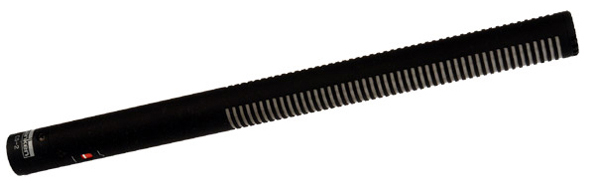
Trew Audio has the new Sanken CS-2, so I was able to spend some time with it in a casual evaluation. At first glance, it looks like a typical short shotgun microphone (which also means it looks a lot like a Sennheiser 416). It looks identical to the Sanken CS-3, in that the interference tube portion (the slotted area of the microphone body) is physically the same, but the CS-2 is almost an inch shorter. But, according to Sanken, the internal design of the CS-2 gives it an effectively longer interference tube than those of other short shotgun microphones, the implication being that the CS-2 will have more “reach” than other mics of similar length.
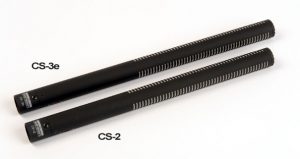
From what I understand, some of Sanken’s design goals for the CS-2 were to have a simple, light-weight, short shotgun mic, with performance exceeding that of established mics in this category (i.e. MKH-416 and the like) at a competitive price. When you pick up the CS-2, you realize that the goal of being light-weight was achieved… it is considerably lighter than the Sennheiser 416.
Unlike the CS-3e, which achieves its extreme low freq rejection and lack of proximity affect with a 3 element array (thus the name CS-3), the CS-2 (like the CS-1) uses a single microphone element.
In the ambient level of our showroom (low level office air-conditioning, etc.), it is difficult to make a definitive self-noise comparison between the CS-2 and CS-3, but it seemed that the CS-2 had slightly less self-noise than the CS-3 with the same input/output level. During my listening test, it seemed that the CS-2 did not have the extreme low frequency off-axis rejection that the CS-3 is famous for, but that could be because the CS-2 has a flatter and more extended low freq curve than the CS-3, so, with the CS-2, there can be more low frequencies wherever the mic is pointing.
Thankfully, there is no switchable pad on the CS-2, and there is no need for one…
As a sound mixer, I have mixed feelings about microphones with switchable pads. This is because, in my experience, the ideal sensitivity for film/video dialog use is usually somewhere between the two pad positions, meaning that a better design would have had a fixed amount of attenuation and done away with the switch. So, thankfully, there is no switchable pad on the CS-2, yet it handles an SPL of 130dB. This is an impressive 10dB improvement over the 120dB handling ability of the CS-3. Some will say that the human voice will not produce over 120dB at one meter, but I can confirm that a CS-3, and a Sennheiser MKH-60 without it’s 10dB pad, can, indeed, have clipping distortion during yelling scenes. It should be noted that the 130dB SPL ability of the Sanken CS-2 is 5dB better than the Sennheiser MKH-60 without its pad. It’s too soon to say whether the CS-2 is a better short shotgun mic than the Sennheiser MKH-60, but this particular characteristic is better for dialog use in scenes with a wide dynamic range (which includes nearly all of them).
Many notable sound mixers already use the Sanken CS-3 as their primary boom mic for exterior use. For these people, in particular, I believe the Sanken CS-2 is a sensible and complementary choice for interior use, or anytime the extreme low frequency rejection of their CS-3 is not needed.
The Sanken CS-2 is also affordable, priced significantly less than the more complex CS-3 and most of it’s high-end German counterparts.
Many thanks Glen for that initial insight of the CS-2.
I love the Sanken approach and have enjoyed my CSS-5 for the last 10 years and my two CS-1 mikes.
I am dissapointed that not bass roll off switch is included on the CS-2.
I discussed this omission on the CS-1 with the two Sanken designers
at the Sanken premises without any effect.
The Rycote Lyre mounts seem to help manage this LF sensitivity better than the KTEK/Sanken mount as it is a definite problem best dealt with in the mike before it reaches the mixer or recorder.
Oh well let’s hope the CS-4 has it all !!!!!!!!!!!!
Kind regards
Mike
Hi Mike,
As you know, the CS-1 low end extends extremely low (thus the many request for a low cut on that mic), but the CS-2 does not seem to be as sensitive to handling rumble, so I doubt it will have the same problem as the CS-1.
Glen